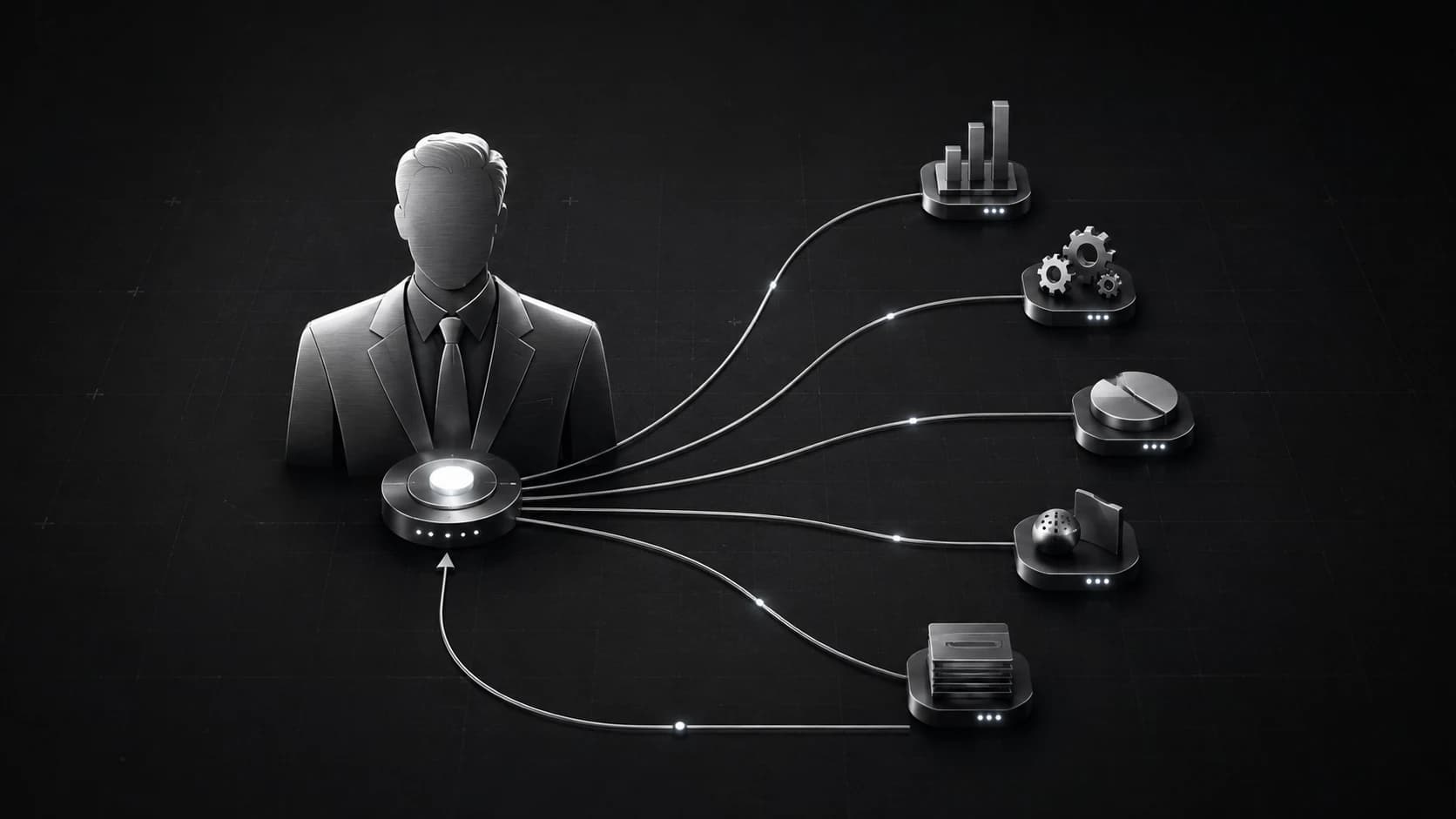
Private equity has found a way to rent an AI engineering army and deploy it across the portfolio.
Blackstone and Hellman & Friedman have backed Ode with Anthropic, a roughly 160-person team that places forward-deployed engineers (FDEs) inside portfolio companies. Anthropic supplies frontier models and engineers to the partnership. Blackstone plans to deploy the group across 25 businesses, with work already underway at six. OpenAI has launched a parallel company backed by more than $4 billion and partners whose networks span over 2,000 businesses.
The capital, engineers, and concentrated distribution can drag a company from workshop to production in months. They also create a new form of borrowed capability.
Private equity’s lasting AI advantage will come from converting external expertise into company-owned operating capability within a finite hold period.
Moving to production is just the beginning
The adoption bottleneck has moved. While model access is now abundant, companies are still struggling to connect models with old software, fragmented data, internal controls, and employees who have jobs to finish while the transformation team rearranges the machinery around them.
Embedded engineers attack that mess directly. At Chamberlain Group, which owns the myQ garage platform, Ode teams helped build a digital doorman that lets delivery workers enter a garage and place packages inside. Chamberlain projects digital-doorman revenue will grow from $40 million in 2025 to $500 million by 2030.
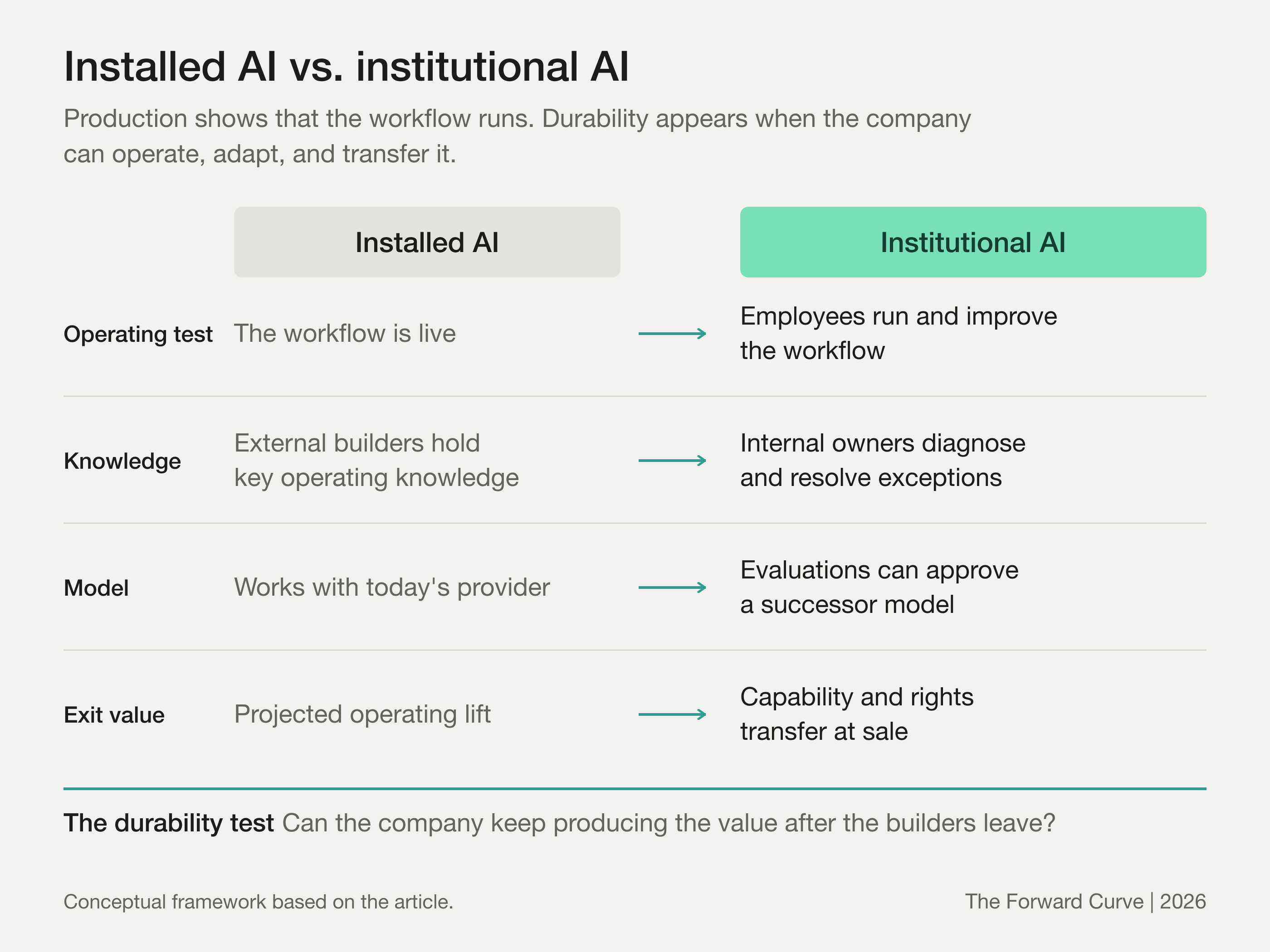
The value prop is compelling: a sponsor can place scarce engineers beside an operating problem, move faster than the portfolio company could alone, then repeat the playbook elsewhere. Reaching production proves the system is installed. It becomes institutional when the company can maintain, evaluate, and adapt it after the builders leave.
The wider results remain early. PwC surveyed 564 PE-backed CEOs and found that 14% reported both revenue gains and cost reductions from AI. However, more than half reported no upside.
Shipping the solution clears one hurdle; preserving the capability introduces three more.
The three handoffs
The first handoff runs from the forward-deployed engineer (FDE) to the employee. The external team knows why the architecture looks the way it does, which prompts failed, how exceptions move, and where the evaluation suite is forgiving. Portfolio employees need enough of that knowledge to operate, diagnose, and improve the workflow after the specialists rotate out.
Otherwise, an AI system can produce EBITDA while nobody on payroll knows how to change it. An impressive demo can quickly turn into an awkward diligence call.
The second handoff runs from the current model to its successor. Models, prices, and product terms change quickly. A durable system can test a replacement against the same tasks, quality thresholds, and unit economics before switching. A fragile one carries its original model dependency until cost or performance forces a rebuild.
The third handoff, from sponsor to buyer, is likely more existential. The baseline is that PE ownership has an expiry date, which makes portability part of the return. Osler’s AI deal guidance tells buyers to examine model dependence, data rights, scaling rights, infrastructure economics, and reliance on key technical personnel. Those questions reach beyond AI companies. Any business selling an AI-supported earnings story will eventually face them.
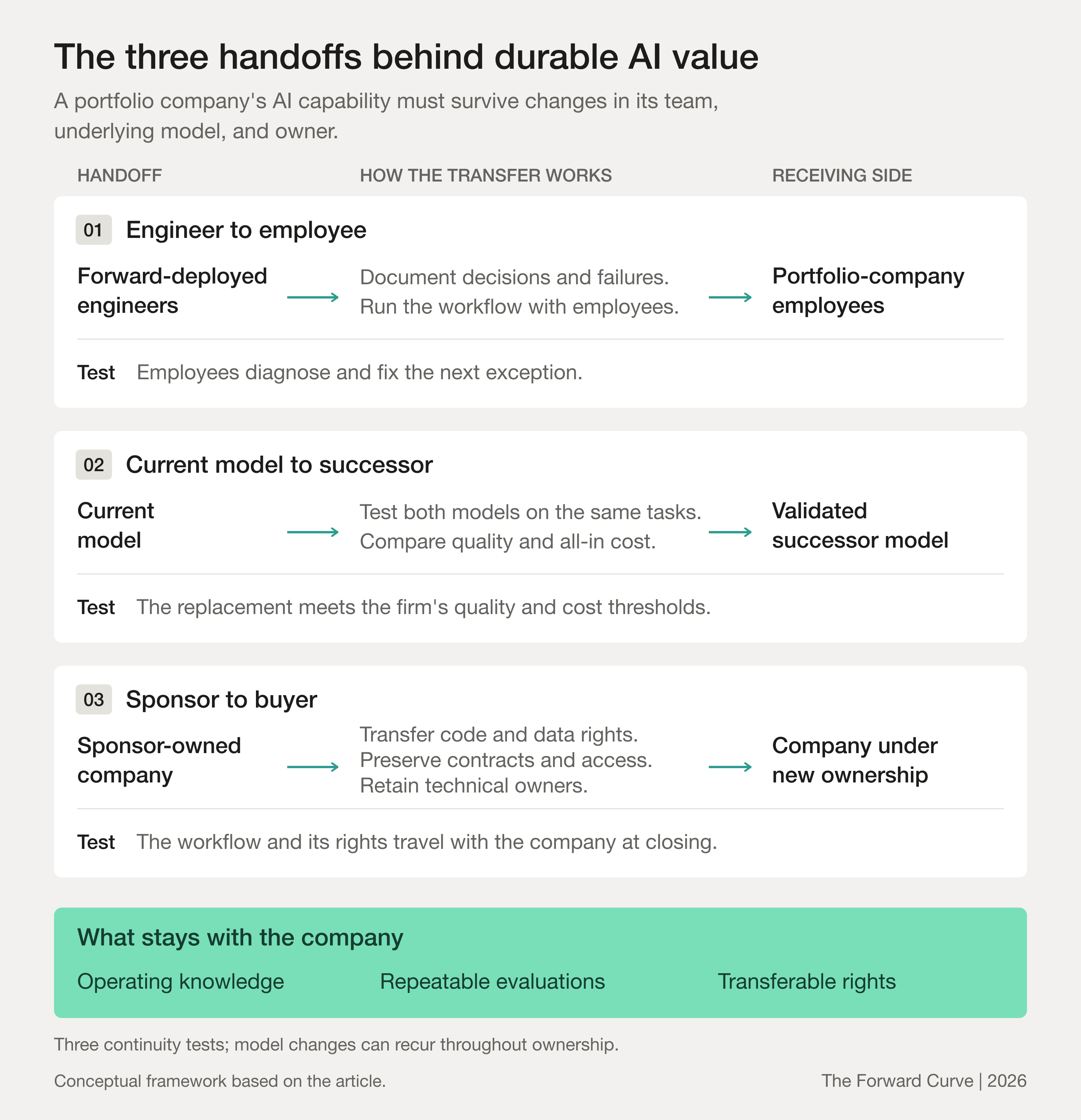
Let’s assume an embedded FDE team creates $10 million of incremental EBITDA and the company sells at a 12x EBITDA multiple. The headline value creation is $120 million. A buyer will pay more confidently when employees can run the system, evaluations can test the next model, and the code, contracts, and data rights transfer at closing. Those conditions determine how much of the $120 million survives diligence. Every broken handoff creates a durability discount.
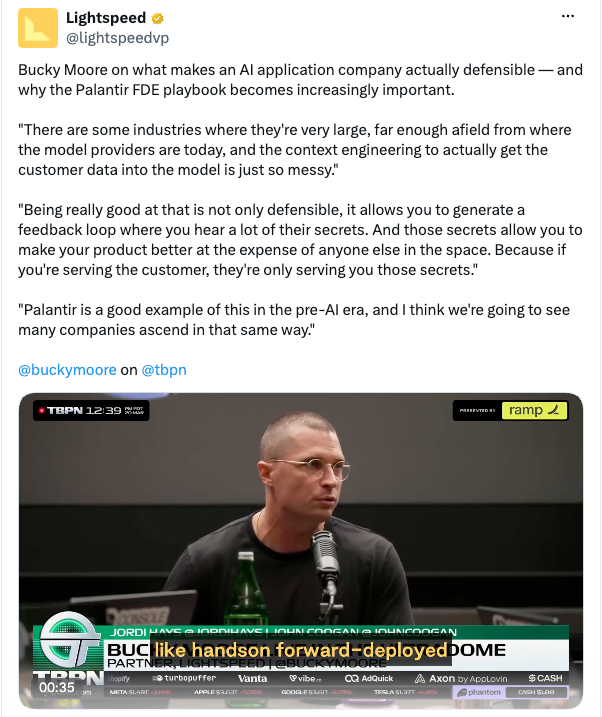
Lightspeed’s Bucky Moore points to the other claimant on this learning curve: the vendor. If the outside firm learns from every deployment, where does the compounding accrue? Moreover, how much longer might a company’s “secret sauce” stay a secret?
The portfolio can become a transfer engine
Private equity may be unusually well designed for this work. One specialist team can encounter similar pricing, SLAs, and reporting workflows across dozens of companies. Each deployment can make the next one faster, and the sponsor can compare adoption and operating results across the portfolio.
Vista has started publishing portfolio AI indicators across revenue, pricing, R&D, support, and sales efficiency. It also acknowledges that AI monetization metrics remain unstandardized. Pilot counts and deployment announcements therefore reveal activity; durable value appears in recurring economics and the company’s ability to keep producing them.
Microsoft CEO Satya Nadella describes the organizational version of this idea: every company should own the learning loop that encodes its institutional knowledge and compounds its human and token capital.
Put the two together and the real contest is over who owns that learning loop. For Ode and similar deployment companies, the strongest version of the model turns a roaming engineering team into a teaching and transfer system. The vendor improves across engagements while each portfolio company retains working software, internal owners, evaluation infrastructure, and portable rights.
The diligence question is simple: what’s the proprietary value that stays with the portfolio company?
Private equity may have solved the first bottleneck by getting senior AI engineers through the door. Its returns will be determined by what remains after they walk out.
Sources:
- The Wall Street Journal: Private Equity Is Deploying an Army of AI Wonks
- Ode with Anthropic: Company Launch
- OpenAI: The Deployment Company
- PwC: Creating Value with AI in PE-Backed Companies
- Vista Equity Partners: 2026 Mid-Year AI Impact Report
- Osler: Translating AI Risk into PE Deal Structure
- Lightspeed: Bucky Moore on the Forward-Deployed Engineering Feedback Loop
- Satya Nadella: A Frontier Without an Ecosystem Is Not Stable